Custom wealth management software development for firms that have outgrown packaged platforms.
For mutual fund distributors, registered investment advisers, asset managers, family offices and the wealth arms of banks and NBFCs. We build wealth platforms and nothing else, which is why the integration and compliance work is largely done before your project starts. The software fits how your firm operates rather than the reverse. You own the source, and pricing is a fixed engagement fee instead of a percentage of your AUM.


 PHFL Home FinancePaygroIndependent
The four segments we build for.
Wealth management is not one buyer, it is several, each with its own workflow, compliance stance and rails, and a platform built for one rarely fits another without a rewrite. We build for all five. Every engagement starts with the segment you serve today, and the architecture is set up so expansion into an adjacent segment is additive rather than a second project.
Registered investment advisers
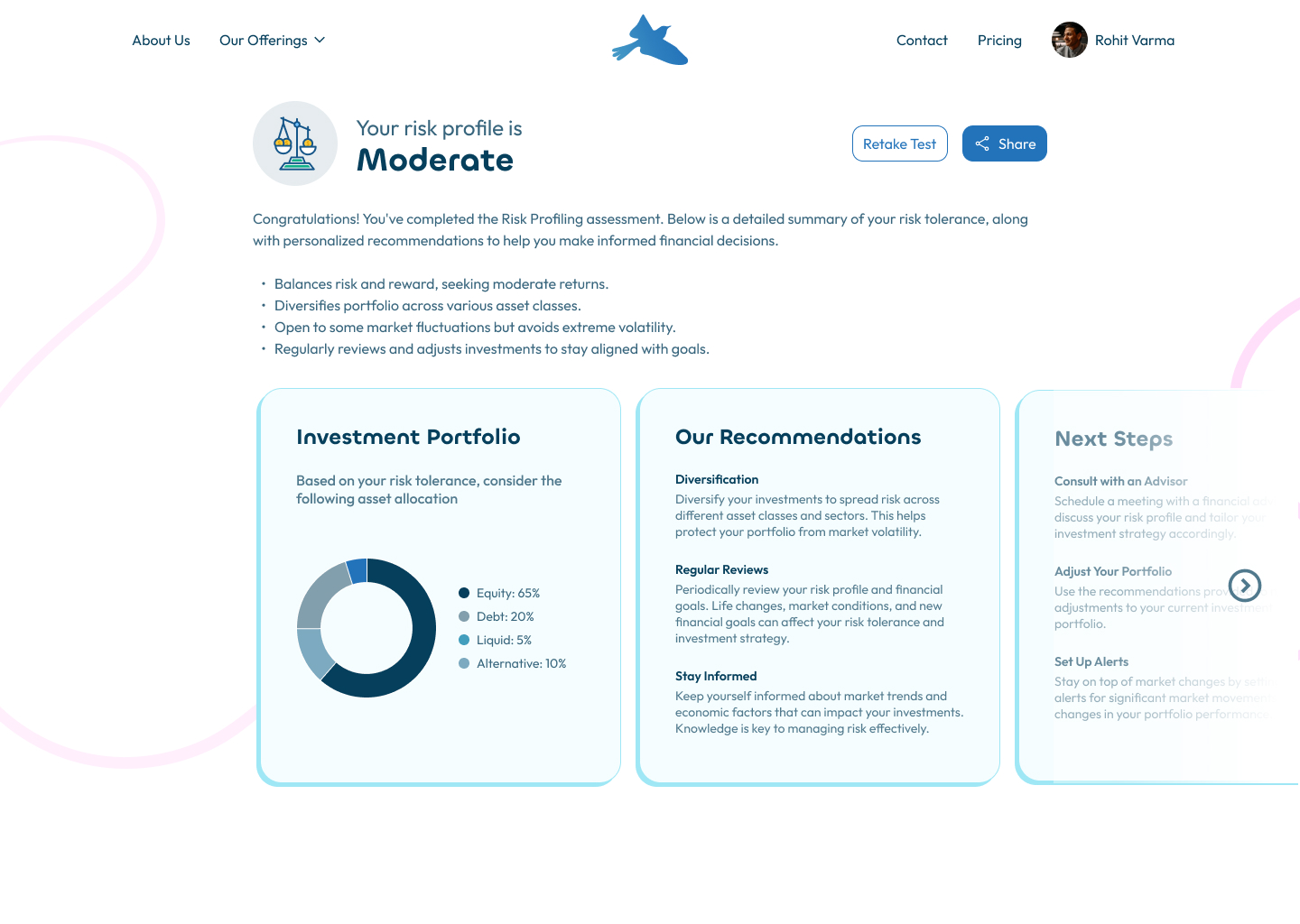
Fee-based advisory practices. Risk profiling, investment policy statements, model portfolios, net-of-fee return reporting, and the disclosure formats your regulator expects.
Advisor experienceAsset managers & banks launching multi-tenant platforms
Enterprise builds where one platform serves several client-facing brands or products. Tenant-level branding, isolated data, and a security posture built to satisfy a financial regulator rather than a generic checklist.
Enterprise deep diveMutual fund distributors & IFAs
Working distributors who have outgrown spreadsheets and generic SaaS. Exchange order routing, registrar feed ingestion, and commission reconciled against what the fund house actually paid rather than what it should have.
MFD & IFA softwareLenders, brokers & finance firms
Lending platforms, broking backends and digital banking flows. Bank statement analysis and rule engines for underwriting, account verification, and mandate and e-signature rails for execution.
Finance & bankingWhitelabel, hybrid and fully custom.
Not every firm needs a custom build. A shorter path is often the right one. Here is the framework we use when a buyer asks “build or buy”. Same framework we use to tell some buyers not to hire us.
Whitelabel platform
You need to launch in weeks, standard workflows fit, and differentiation is not the software itself.
Fast, low upfront cost, immediate feature list.
Vendor owns the roadmap. Your operations bend to the platform. Per-client or per-AUM pricing scales against you.
Modular hybrid
You want a custom client-facing layer on top of proven vendor engines for RTA, KYC or execution.
Best of both. Vendor manages the plumbing, you own the experience.
Integration surface area doubles. Requires an engineering team that can hold both stacks together.
Custom platform
The software is the differentiation. You have scale, an in-house owner, and a long-term view.
You own the roadmap, the data, the UX and the IP. Pricing is a fixed engagement fee, so it doesn't scale against you as you grow. Compliance stance is yours to set.
Longer build, higher upfront cost. Needs a partner who has already put wealth platforms into production.
Why firms move off packaged platforms.
Most firms we work with started on a packaged platform. One of the wealth SaaS or MFD tools you see advertised at every industry event. They ran on it for a year or three, sometimes longer, until something broke.
Usually it is one of four things. The workflow fights the operations team. They spend more time working around the platform than getting real work done. The differentiation stops being possible. They cannot change the client experience to match the brand because the platform owns the UI. The economics invert. Per-client or per-AUM pricing scales against them the more successful they become. The compliance stance is not theirs. When SEBI or AMFI updates something, they wait on the vendor.
Any one of these is a signal that custom might be worth considering. Two of them together usually make the case obvious. If you are still mapping out which layers you run and where they rub against each other, start with the anatomy of an advisory tech stack.
What custom actually gives you is control over four things the packaged path does not: the operating model, the economics, the differentiation, and the compliance posture. In exchange you take on the responsibility of an owner. That does not suit every firm.
The eight capability areas we usually build.
Every custom build has its own scope. These are the eight capability areas the platforms we ship consistently include. Each one is deep work in its own right, wired into the same data model and integration layer.
Onboarding, KYC & suitability
PAN OCR, Aadhaar e-KYC via DigiLocker or offline XML, CKYC pull and reuse, video KYC for RBI-regulated flows, risk-profiling questionnaires, IPS generation, and adviser agreements. Same pipeline serves an MFD, an RIA and an AMC.
Data ingestion & reconciliation
BSE Star MF and NSE NMF II order feeds, CAMS and KFintech RTA statements, AMFI fact sheets and NAV feeds. All reconciled to a single portfolio model per client, per folio.
Portfolio analytics & reporting
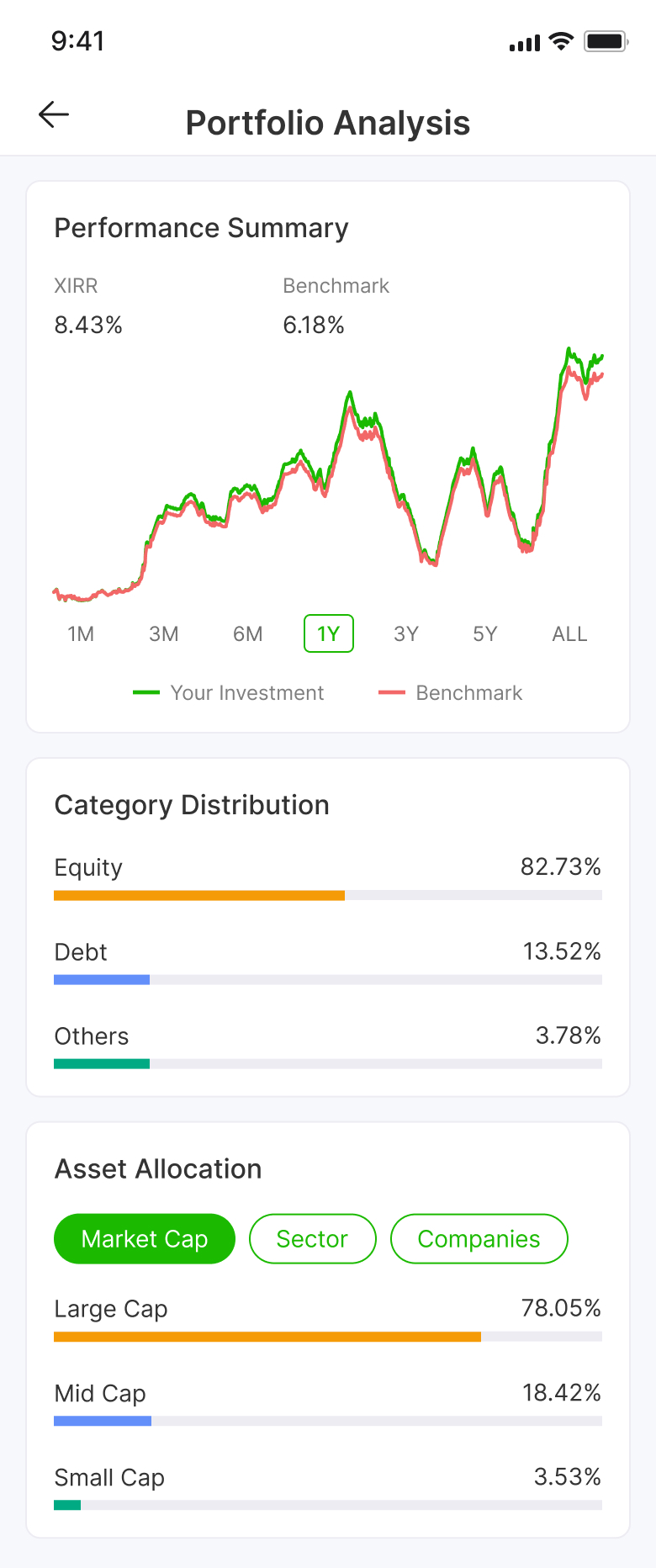
XIRR, TWRR, absolute return, benchmarks, factor decomposition, drawdown analysis and rolling returns. Branded client reports, capital-gain statements and SEBI disclosure-format outputs generated on demand.
Advisory workflow & model portfolios
Model portfolios by risk bucket, client mapping, rebalancing engines, recommendation queues, order approval flows, and audit trails on every advisory action. Built to survive a SEBI IA inspection.
Order execution & settlement
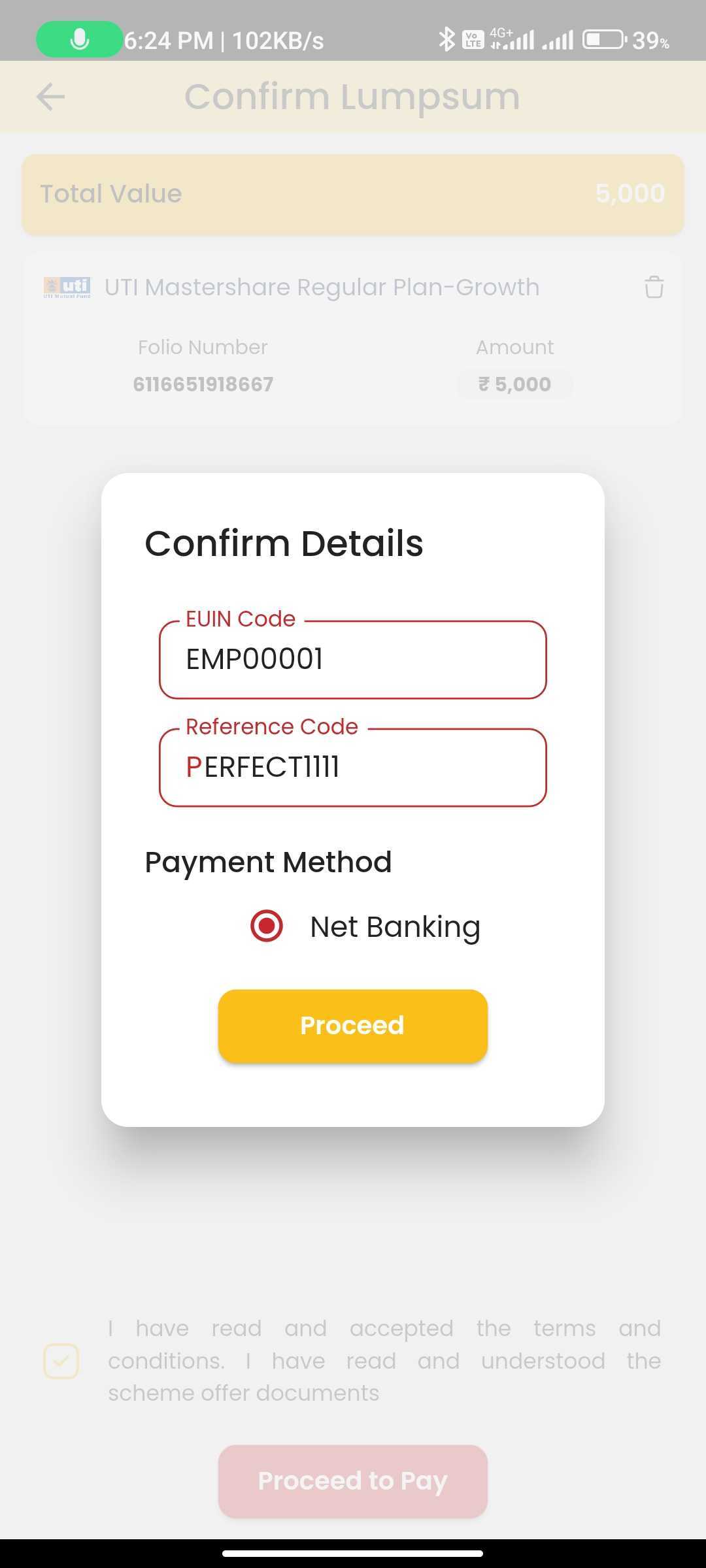
One-click SIP, lump sum, switch and redemption. Route via BSE Star MF or NSE NMF II. e-NACH mandate setup over NPCI, e-Sign for consent, and reconciliation against AMC settlement files with clawback alerts.
Commission, revenue & payouts
AMC-wise payout ingestion matched at the investor-folio level. Trail commission reconciliation, upfront tracking, B30 incentive claims, GST and TDS calculations, and downstream payout to sub-brokers if you run a distributed network.
Compliance, audit & disclosures
SEBI IA suitability trail, AMFI half-yearly disclosure generation, RBI CSF and SEBI CSCRF security posture, immutable audit logs, data-residency guarantees and role-based super-admin governance for larger teams.
Multi-tenancy, roles & scale
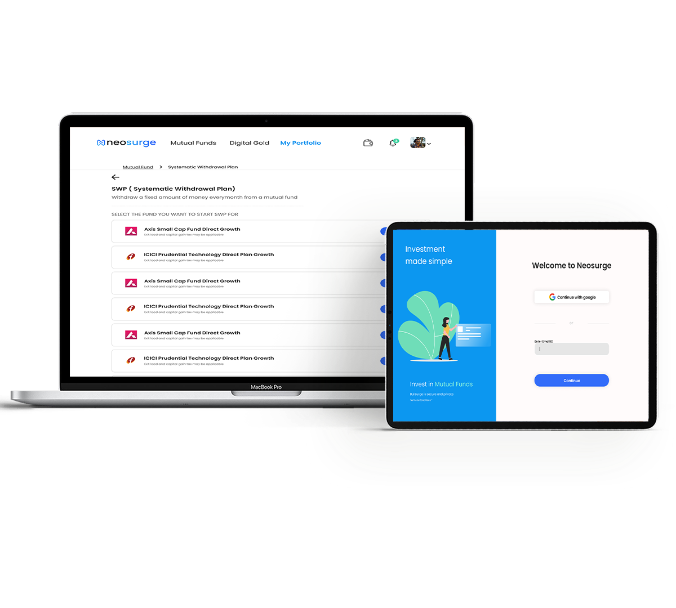
For AMCs and enterprise wealth arms: multi-tenant data isolation, tenant-level branding, per-tenant SLAs, role-based access from super-admin down to individual RM, and horizontal scale to the tens of thousands of clients an AMC digital platform needs.
Questions buyers ask us.
Answered up front so you can decide if we’re a fit before scheduling a call.
How is this different from packaged wealth platforms?
Packaged platforms come with a fixed feature set and a roadmap the vendor controls. We build custom, so the platform is shaped around your operating model. Not every firm needs custom. Where a packaged platform gets you 90% of the way, take it. We are for the cases where it does not.
Can we start with a segment and expand later?
Yes. Most builds start focused on one segment, MFD or RIA or AMC, and expand once the core is live. The data model, integration layer and compliance backbone are shared across segments so expansion is additive, not a rewrite.
Which Indian wealthtech rails are already live in production for your clients?
BSE Star MF, NSE NMF II, CAMS, KFintech, DigiLocker, Aadhaar e-KYC, CKYC, KRAs, NPCI e-NACH, e-Sign, Razorpay, BillDesk, Cashfree, CMOTS, PaRRVA and AMFI feeds. All in production. Not demos.
How long from discovery to a usable first version?
10 to 14 weeks for a first internal-facing version. Feature parity with an existing setup runs 5 to 7 months. Full replatform including data migration is 8 to 12 months. Fixed fee, milestone billed, so there are no hourly-billing surprises.
Who owns the code and the data?
Everything ships to you: source, database, infrastructure-as-code and documentation. Host it yourself or let us host it. Pricing is a fixed engagement fee, and there is nothing tying you to us if the relationship ends.
What happens after launch?
12 to 24 months of SLA-backed support and enhancements retainer, with the build team still attached. As your internal team ramps, we hand off in stages.

…it’s challenging to make a financial firm look engaging and fun, they’ve managed to pull it off.
The Indian wealth rails we have shipped on.
Two exchanges, two registrars, a national KYC registry and a mandate system, each with its own file formats, cut-off times and settlement quirks. A team that has made those work in production does not find a custodian API or an aggregation feed difficult. Every integration below is live for a paying customer. We have been through the sandbox handshakes, the settlement file oddities and the 2am support calls that only happen once you are live. See the full integration directory for what each rail involves.
The compliance work that happens during the build.
Compliance expectations become engineering requirements on day one. The regimes we have built under are SEBI, AMFI and RBI. What carries across markets is the engineering underneath: a suitability trail, an immutable log and an enforced retention window behave the same way whichever regulator is asking. Your compliance officer and counsel own the rulebook. We build the system that has to satisfy it.
Suitability and advice trail
Every recommendation tied to the risk profile behind it, investment policy statements generated rather than typed, refresh cadences enforced by the system, and net-of-fee performance reporting. Built against SEBI's Investment Adviser regulations, which is the regime our clients are inspected under.
Payout and disclosure engines
Distributor payout rules encoded rather than spreadsheet-maintained: incentive tiers, clawback windows, adviser identity capture, tax treatment, and disclosure documents produced in the format the regulator asks for. Currently encoded against AMFI rules.
Security posture for a regulated entity
Access control, audit logging, encryption at rest and in transit, vulnerability disclosure and incident response playbooks, written to a financial regulator's framework. Ours were built to RBI's Cyber Security Framework and SEBI CSCRF.
Records, residency and audit
Immutable audit logs, backup and disaster recovery, data residency for regulated flows, and retention windows enforced by the platform itself. The windows differ by market; the mechanism that guarantees them does not.
A few of the wealth platforms we’ve shipped.


Findola Capital1L+ Downloads · Live
Self-serve mutual fund app with two recommendation tracks
DIY mutual fund investing for first-time Indian investors, with a toggle between risk-profile-driven picks and Findola's own research-led portfolios. Live on iOS and Android.


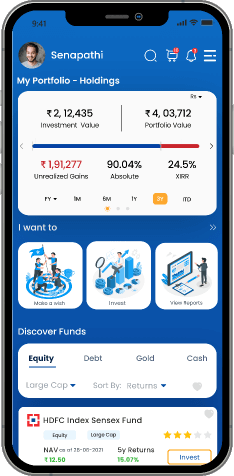
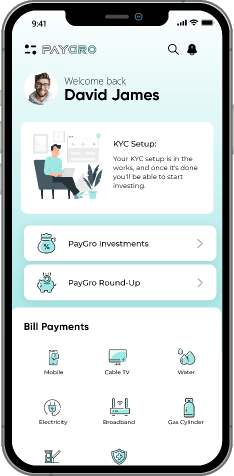
Discovery to launch in four steps.
Working software every two weeks, fixed-fee proposals with milestone billing, and a support retainer once you’re live.
Discovery
We map your operating model, integrations, compliance stance and the pain points that made you consider custom. Output is a written scope and a fixed-fee proposal.
Architecture
Data model, integration surface, security posture, tenancy design and infrastructure. You see the blueprint before we write production code.
Sprint build
Working software every two weeks. You talk directly to the engineers writing it, and every milestone goes through UAT before it's called done.
Rollout & support
Data migration, parallel-run cutover, monitoring, then 12 to 24 months of SLA-backed retainer. Handoff in stages as your team ramps.
Frequently asked questions.
Tell us what you’re trying to build.
A short note about what you’re trying to ship, who it serves and your rough timeline is enough to get started. Expect a candid read on whether this is work we should be doing for you at all.