The nine layers of an RIA tech stack, and where they usually break.
From the custodian up to books and records: what each layer owns, and the four places they stop talking to each other. Plenty of people have already ranked the top ten advisor tools. We build the software that sits between them, so the seams are where we have something useful to say.



 PHFL Home FinancePaygroIndependent
The nine layers, and what each one owns.
Most write-ups list the products. Products change. What each layer has to do stays the same, so that is how we have set this out. Here is what each one owns, and what it costs you when it is the wrong fit.
Custodian and account opening
Where the assets sit and where new accounts get opened. Whichever one you pick hands you its file formats, its account opening flow and its cut-off times, and everything above it has to live inside those. Firms on two custodians deal with two sets.
Portfolio accounting and performance
The books. Positions, transactions, cost basis, returns. Billing reads from here, reporting reads from here, and the client sees the output, so a mistake here shows up in three places at once. The daily job is reconciling against the custodian file. In a growing firm that is usually where the operations hours go, and it creeps up slowly, so most people only notice when they are hiring for it.
CRM and the household record
Contacts, notes, tasks, pipeline. The part that causes trouble is the household. You define it in the CRM, then find out the billing engine and the reporting tool each have their own version of it.
Financial planning
Cash flow projections, retirement modelling, tax and estate scenarios. For a planning-led firm this is what the fee is for, so it is rarely where anyone wants to compromise. It is also the most cut off from everything else, because the plan assumptions sit in the planning tool and go nowhere.
Proposal, risk and the IPS
Risk tolerance capture, proposal generation, the investment policy statement. A small layer, and the one examiners spend the most time on, because the suitability trail lives here. The record of why you recommended something has to still be there years later.
Trading and rebalancing
Model portfolios, drift monitoring, tax-aware rebalancing, block trades, orders routed to the custodian. The reason to buy one is capacity. Without a rebalancer, portfolios per advisor climbs every time household count climbs, and at some point you hire. With one it stays roughly flat. That is why it tends to be the first purchase after a growth spurt.
Fee billing
Fee schedules, householding, tiered and flat rates, minimums, proration when money moves mid-period, then the invoice or the custodian debit. Get it wrong and the error repeats every quarter until somebody reconciles by hand and finds it.
Client portal and reporting
The only screen your client ever looks at. Statements, performance, documents, secure messaging, and increasingly the held-away accounts you do not manage. If you compete on client experience you will hit a wall here, because in a packaged stack this screen belongs to the vendor and you get their version of it.
Compliance, archiving and books and records
Email and message archiving, code of ethics and personal trading, marketing review, retention. Firms buy this late. And a product on its own does not get you there. What you need is every other layer writing down what happened and who did it, in a form nobody can edit afterwards.
All in one, best of breed, or best of breed with a spine.
Almost every stack is one of three shapes. Which one fits you comes down to household count, how many custodians you are on, and whether the thing you compete on sits inside the software or around it.
All in one
Under about 500 households, a small team, and nobody who wants to own an integration project. You want to be operational rather than in control of every detail.
Everything sits with a single vendor, so there is one contract and one number to call. Billing and performance agree because the same system produced both, and new staff only have one product to learn.
The client experience is the vendor's. Pricing usually moves with AUM or household count, so it grows as you do, and when the product does not model a workflow you need, you wait for their roadmap to reach it.
Best of breed
You have a strong preference in two or three layers, usually planning and portfolio accounting, and somebody in the firm can own the gaps between products.
Every layer is as good as that category gets. Swap one out without touching the rest. No single vendor has you.
You own the integration work. When billing and performance disagree, both vendors are right inside their own boundary, and it is still your problem.
Best of breed with a custom spine
Past roughly 1,000 households, or on more than one custodian. The stack is already best of breed and the gaps between the parts now cost you a person.
Keep the vendors that work and stop making them agree by hand. One reconciled data model underneath, one household definition, and the client-facing part is yours to build.
It is a build. You need a product owner inside the firm. Only worth it once the gaps cost more than the build does, and plenty of firms have not got there yet.
What a stack costs beyond the subscriptions.
Ask a firm what its tech costs and you get the total of the subscriptions. That is usually the smaller number. The bigger one is the time people spend because the products do not pass data to each other properly, and it never shows up on an invoice because it is paid in salary.
Same places every time. Somebody reconciles billing against performance by hand at quarter end. A report that should be one click takes two systems and a spreadsheet. Client details get keyed in three times, and six months on nobody is sure which system has the right address. Somebody asks a question and it takes a day to answer.
This does not mean the products were badly chosen. Each vendor is right inside its own boundary. Nobody owns the boundary, and no vendor has a reason to fix a gap that only exists because a competitor is on the other side of it.
For a small firm this is an annoyance and the right move is to live with it. Past a certain size it turns into a salary. Every stack has these gaps, so the only question is whether closing them costs less than working around them.
The four seams where stacks come apart.
Four of these come up again and again. No vendor is going to fix them, because each one sits in the space between two systems that are both working fine on their own. See the integration directory for how we approach the plumbing underneath.
The household definition
A household is a family in your CRM. Billing sees a set of accounts sharing one fee schedule. Reporting shows whatever got grouped when someone built the report. All three are reasonable. The result is one client showing up three ways, and any question that crosses systems needs a person.
Billing against performance
Fees come off one position file and returns off another, pulled at different times, with different handling of trades that have not settled. Both systems are internally consistent. They still disagree, and the client is the one who spots that the fee does not match the balance next to it.
Onboarding entered more than once
A new household gets keyed into the CRM, then into the custodian's account opening flow, then the planning tool, often the portal too. Every re-entry is a chance for them to drift apart. Six months later nobody knows which one has the right address.
Questions nothing can answer
Which households are below their model weight, above the fee minimum, and have not had a review this year. All of that is in the stack somewhere. No single system has all three, so once a quarter somebody builds it in a spreadsheet.
If two or three of those sound like your firm, a call is usually faster than more reading. Thirty minutes, and we will tell you which of them is worth fixing first.
Book a 30-min consultWhat a custom spine does.
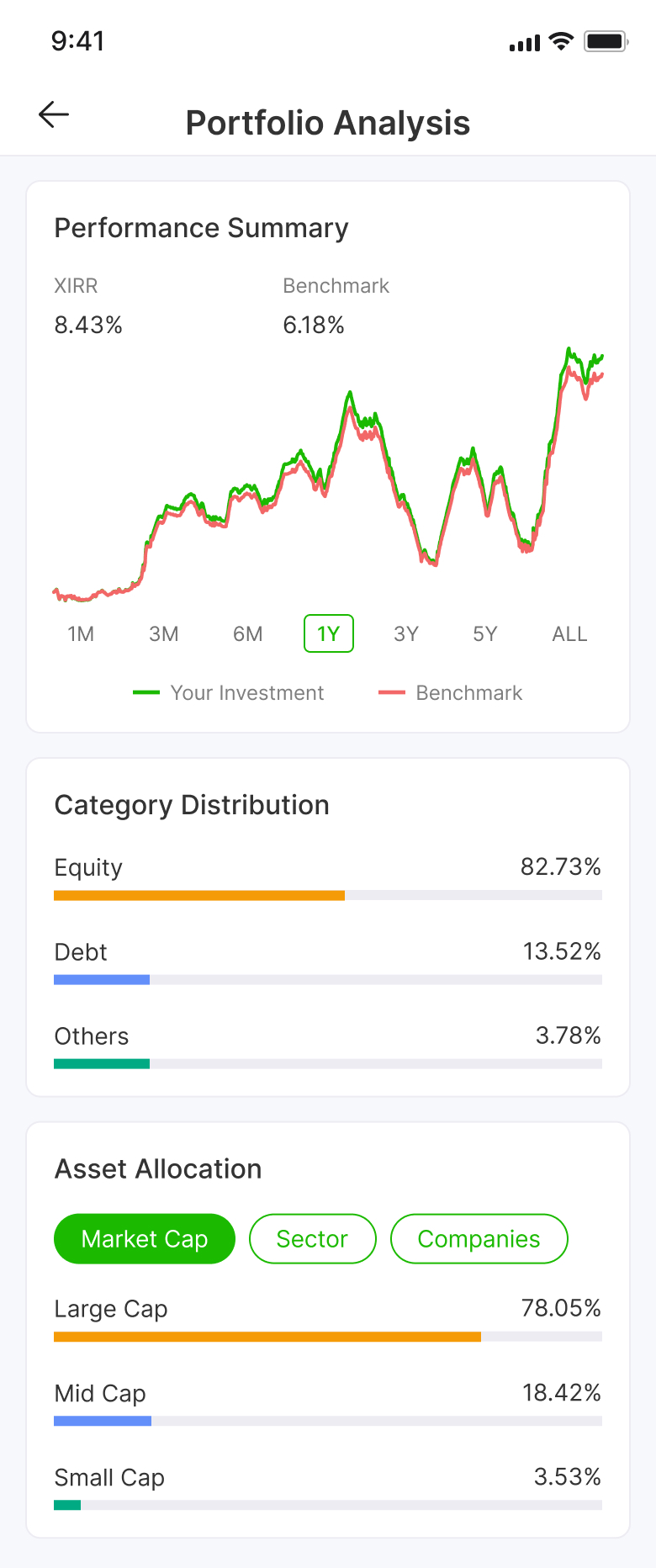
A spine sits under the stack you already run. It holds a single reconciled view, one household definition, and the workflows your firm competes on. Your custodian and portfolio accounting both stay where they are, and the answers stop needing a person. There is more on how we build this on our custom wealth management software page, and at enterprise scale on the enterprise platform page.

…it’s challenging to make a financial firm look engaging and fun, they’ve managed to pull it off.
Questions we get asked.
Answered here so you can work out whether we’re a fit before booking anything.
We are happy with our vendors. Is this still relevant?
Yes, because the assumption is that you keep them. Any firm we would work with has already picked the layers that work. The problem worth solving is the space between them.
How do we know the seams are costing us enough to act?
Count hours. Somebody reconciling billing against performance by hand each quarter, a report that needs two systems and a spreadsheet, onboarding keyed more than twice: each of those is a headcount number. Around one full-time role is usually where a build starts paying back inside two years.
Do we need to migrate anything?
Usually not. A spine reads from what you run and writes back where the vendors let it. Migration only comes up if a layer was getting retired anyway, and that decision is better made on its own than bundled into a build.
What size firm does this make sense for?
Past about 1,000 households, or earlier if you are on more than one custodian or you compete on client experience. Below that the honest answer is usually to buy another product or put up with the manual step.
Who owns what we build?
You do. Source, database, infrastructure definitions, documentation. Fixed fee rather than a share of AUM, so it does not get more expensive as you grow.
A few of the wealth platforms we’ve shipped.


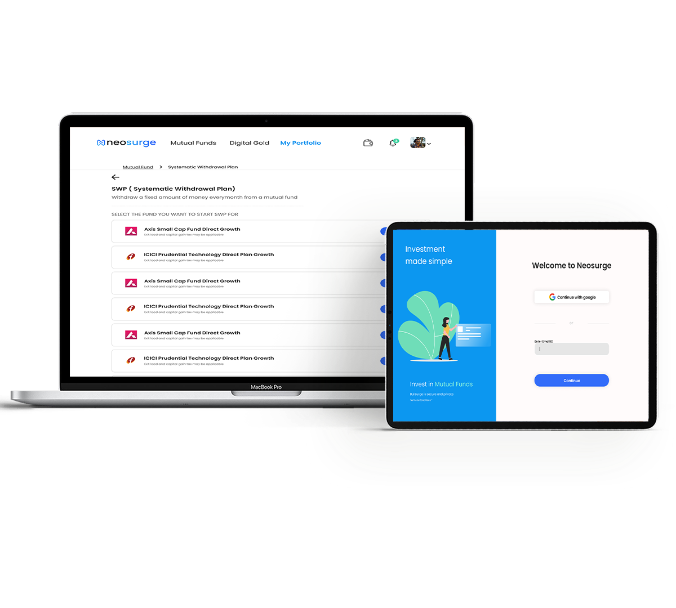
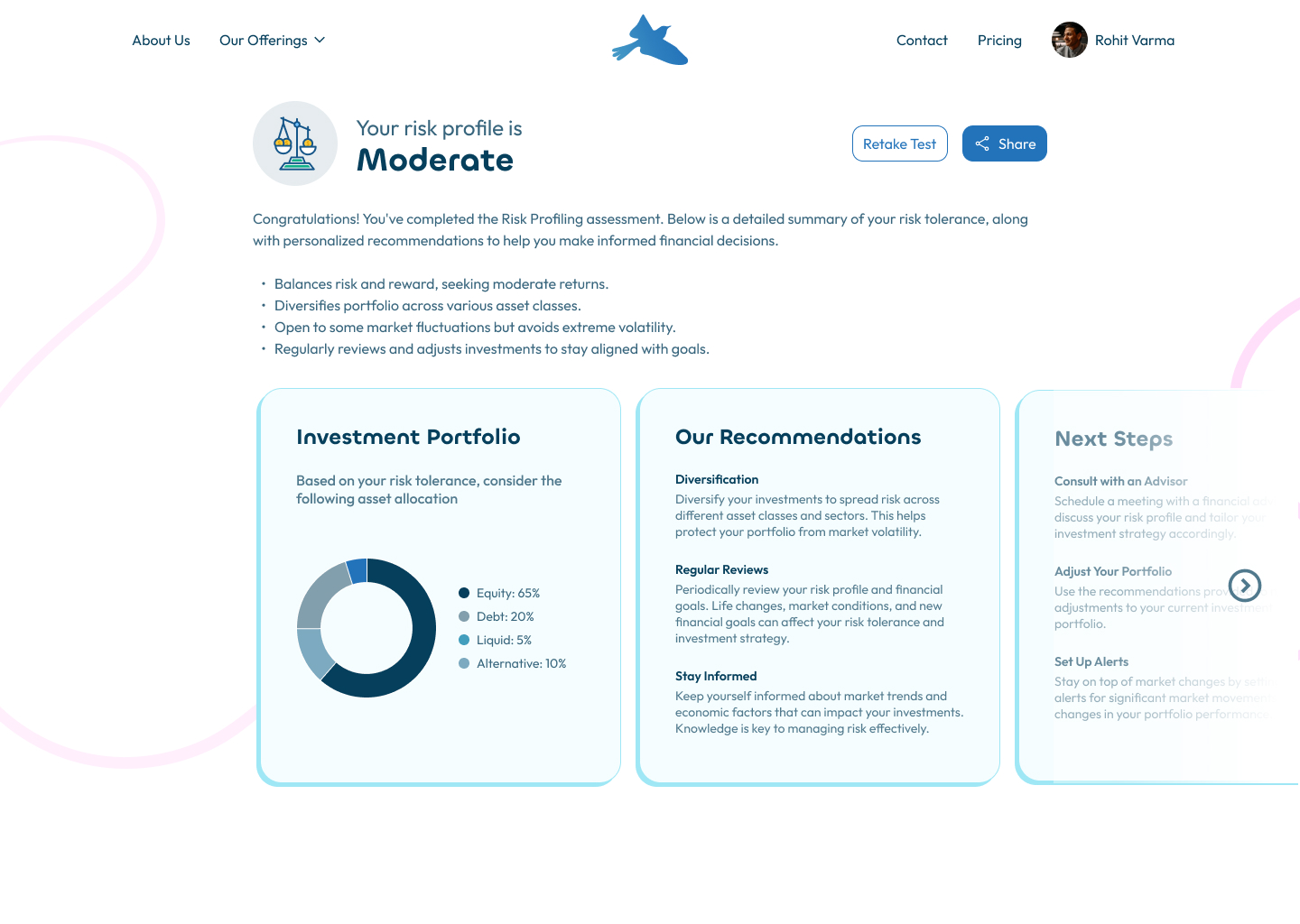
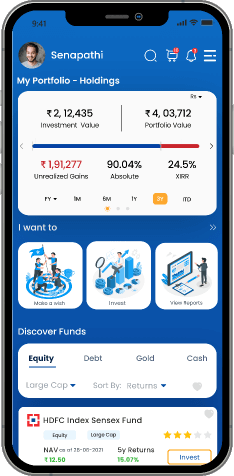
Findola Capital1L+ Downloads · Live
Self-serve mutual fund app with two recommendation tracks
DIY mutual fund investing for first-time Indian investors, with a toggle between risk-profile-driven picks and Findola's own research-led portfolios. Live on iOS and Android.



RIA tech stack questions.
Bring us the question your stack cannot answer.
Thirty minutes walking the layers you actually run, the thing you keep assembling by hand, and roughly how many households you carry. If a vendor already solves it we’ll point you at them and say so on the call. The form reaches the same people if you would rather write it down first, and we reply within one business day.